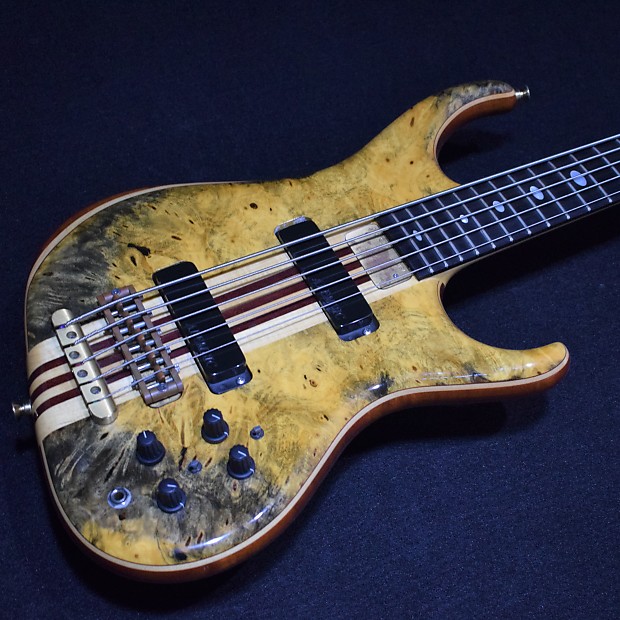
Alembic was a company started in 1969. The intent of the company was to help the Grateful Dead have better audio quality on their live recordings. A lot of the technology used during live concerts was conceived and developed by people working with the Grateful Dead. The Grateful Dead played live constantly and were an ideal testbed for different ideas about sound amplification. PA systems and live microphones were some of the pieces of gear that were modernized during this time period. Instrument electronics were another field that needed advancement. Alembic was on the forefront of these advances.
Instruments before this time tended to be noisy when plugged in to an amplifier in some situations. The electronics used in vintage instruments commonly picked up electrical interference. In 1955 an employee of Gibson named Seth Lover invented a guitar pickup called the Humbucker. The humbucker solved the problem of noisy instrument electronics by cancelling the 60-cycle hum that instruments picked up. He did this by using two magnetic coils in his pickups. One to sense the movement of the string, and the other with reverse polarity to provide phase cancellation of the sound. This lead to a quieter instrument. The side effect of this design however was decreased treble from these instruments as some of those frequencies were also cancelled.
In an effort to increase the fidelity of Grateful Dead recording, Alembic attempted to get the same results in a different way. They used pickups that had a full frequency range but a low output. These low impedance pickups needed a preamp to boost their signal. Alembic started as a preamp manufacturer. They designed an on-board electronics package that was quiet and reproduced an instruments full range of frequencies. In 1972, they began building extremely high-end instruments with these electronics built in. These instruments were innovative electronically and structurally. The boutique instrument market was almost singlehandedly invented by Alembic. Their basses were in high demand by studio musicians in the 70’s as brands like Fender and Gibson fell out of favor due to quality control issues and technological stagnation.
Electronics are an import part of Alembic Basses. These basses are named after the model of electronics on-board. The body of an alembic can be anything the customer can dream up. All things are option for a totally custom experience. Alembic basses come at a premium price with base models starting around nine thousand dollars and high-end models in the twenty to thirty-thousand-dollar range. They make enough instruments that the resale value is much much lower, usually due to the individuality of each instrument. I’ve used an Alembic Europa and an Anniversary model on recordings and been happy with the results. They are extremely versatile instruments in the studio. I like to keep an eye on the used market for them because serious deals can be had occasionally.
 Steve's blog